
Gamification
Turning Everyday Interactions into Meaningful Experiences
Gamification applies simple game mechanics—such as points, challenges, progress tracking, and rewards—to non-game contexts to drive engagement and motivation. For corporates, lightweight mobile gamified apps offer a powerful way to connect with employees, customers, and partners without the cost or complexity of large platforms.
By designing short, intuitive experiences—daily challenges, quizzes, leaderboards, or missions—organizations can encourage participation, reinforce desired behaviours, and gather real-time insights. Whether it is improving learning retention, promoting wellness, driving sustainability actions, or strengthening brand loyalty, gamified mobile apps make engagement measurable, repeatable, and enjoyable. When done well, they transform passive stakeholders into active participants, creating stronger alignment between corporate goals and human behaviour.
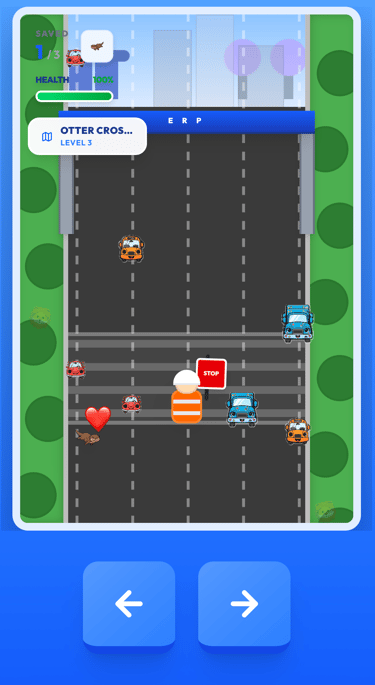
Sample - Biodiversity Game
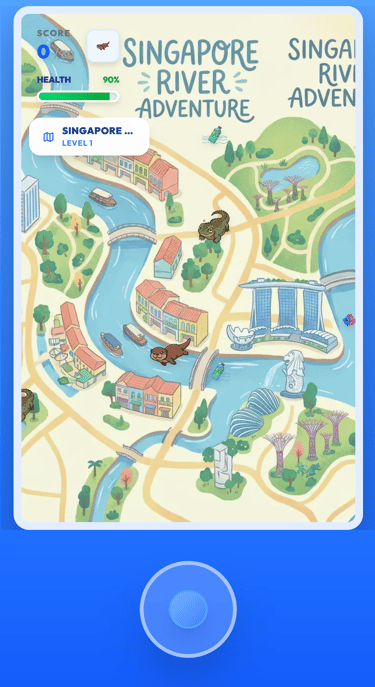
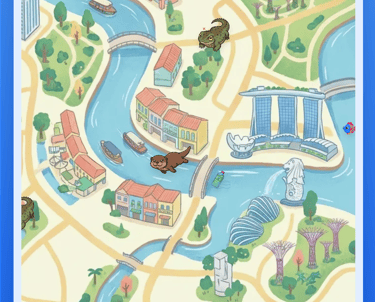
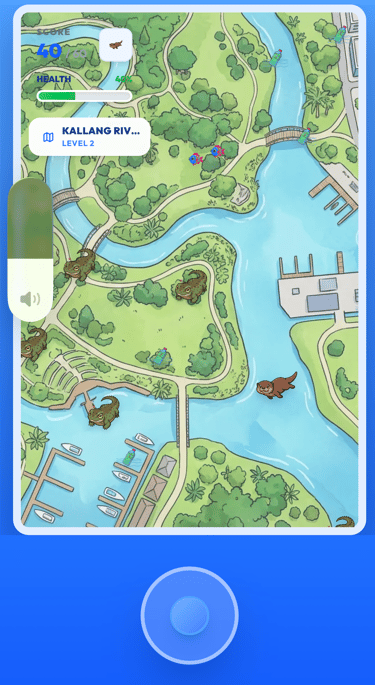
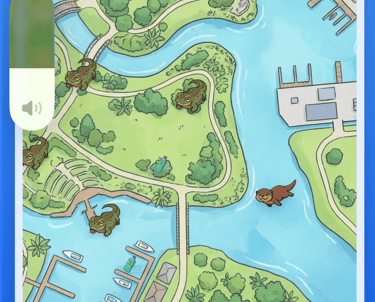
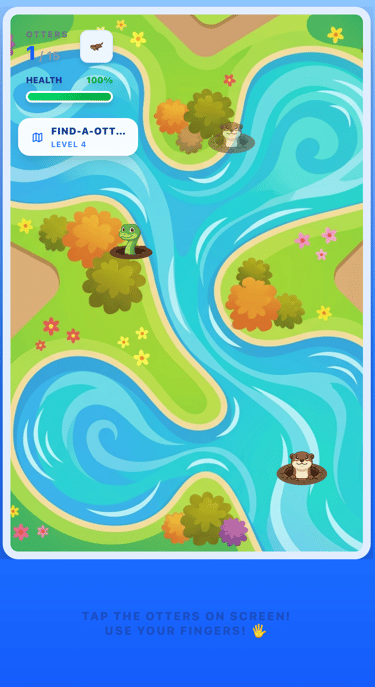
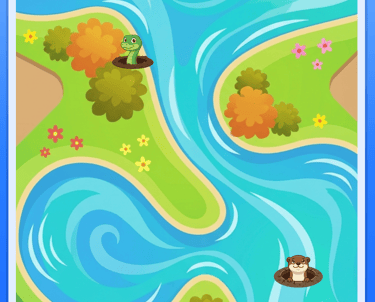
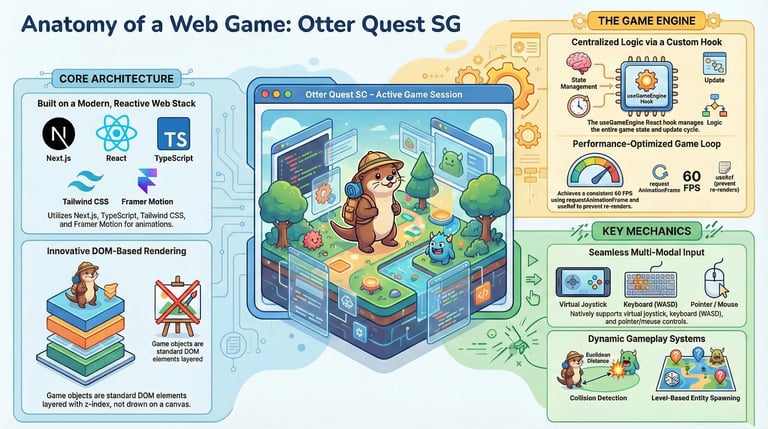
Behind the Scenes: How Modern Web Tech Powers Otter Quest SG
Building a high-performance game for the web requires a delicate balance between visual flair and technical efficiency. Otter Quest SG achieves this by utilizing a cutting-edge, reactive tech stack and a specialized internal engine designed to run directly in your browser without the need for downloads.
The Engine’s "Heartbeat"
The core of the game is driven by a custom system called the useGameEngine hook. This serves as the central brain, managing everything from movement to scoring. To ensure the game feels fluid, it utilizes a 60 FPS update cycle powered by requestAnimationFrame.
One of the cleverest parts of this "heartbeat" is the use of a Time Delta (dt). This calculation ensures that whether you are playing on a high-end gaming monitor or an older smartphone, the otter moves at the same speed regardless of the device's refresh rate. To keep performance lightning-fast, the developers use useRef to store high-speed data like velocity, bypassing standard React updates that might slow down the experience.
A New Way to Render
While many web games use a "Canvas" element (essentially a blank box that gets redrawn constantly), Otter Quest SG uses DOM-based Rendering. This means the game elements are treated like standard web components, styled with Tailwind CSS, and animated using Framer Motion.
The game logic operates on a fixed 600x900 coordinate system, which acts as a virtual stage. To make sure the game looks right on any screen size, a scaling layer uses CSS to perfectly fit these coordinates to your device’s aspect ratio. The visuals are organized into layers (z-indexing), ensuring the background stays at the bottom, the player in the middle, and the UI (the HUD) stays on top.
Smart Systems and Seamless Play
The gameplay mechanics rely on precise mathematical logic:
Collision Detection: The engine constantly runs Euclidean Distance checks. If the distance between the player and an item is less than their combined size, a "hit" is registered.
Dynamic Spawning: Instead of a fixed pattern, entities like fish or hazards appear based on a probability-per-frame model. This makes Level 3’s heavy traffic feel chaotic and realistic compared to the calmer earlier levels.
Play Anywhere: The Multi-Modal Input System allows players to switch seamlessly between a virtual touch joystick, keyboard (WASD), or mouse-clicking.
The Support Structure
Under the hood, the game is supported by Supabase for tracking high scores and Web Audio API for crisp sound effects. Even the game's visuals are highly optimized; a specialized asset pipeline uses Python scripts to clean up images and ensure they load instantly over the web.
To understand how this all fits together, think of the game like a live theater performance: the Game Loop is the stage manager keeping everyone on time, the DOM-based Rendering is the physical set and actors you see on stage, and the Next.js framework is the theater building itself, providing the structure that makes the show possible.
© OpenSME Pte Ltd.